


What Does a Commercial Electrician Do? Key Services Explained
- May 14
- 5 min read
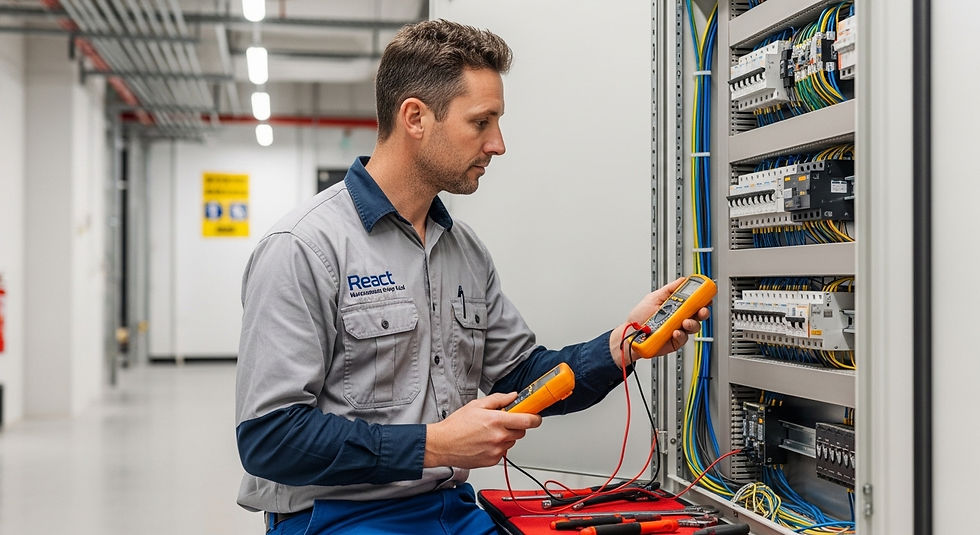
Understanding the Role of a Commercial Electrician
A commercial electrician is a tradesperson who works on electrical systems in business buildings, factories, schools, hospitals and other non-residential sites. Unlike a residential electrician who mostly deals with homes, a commercial electrician handles larger loads, more complex wiring, and stricter safety rules. The job involves planning, installing, testing, maintaining and repairing electrical equipment that keeps a commercial property running smoothly.
What Makes a Commercial Electrician Different?
The main differences are the scale of the work and the regulations that apply. Commercial projects often require three-phase power, high-capacity panels, and specialised equipment such as HVAC controls, fire alarm systems and data networks. A commercial electrician must also be familiar with Australian standards like AS/NZS 3000 (the Wiring Rules) and the specific licensing requirements of each state or territory. Because the stakes are higher – a power failure can halt a factory or affect patient care – commercial electricians are trained to follow detailed safety procedures and to keep detailed records of all work performed.
Key Services Offered by Commercial Electricians
Installation and Upgrades
Design and install new power distribution systems for office buildings, retail centres and warehouses.
Fit energy lighting, emergency lighting and exit signs that meet Australian Building Code requirements.
Upgrade old switchboards to modern, fault-tolerant panels with residual-current devices (RCDs).
Install specialised circuits for heavy machinery, refrigeration units and kitchen equipment.
Maintenance and Repairs
Conduct routine inspections of wiring, sockets and circuit breakers to spot wear and corrosion.
Replace faulty components such as fuses, contactors and surge protectors.
Service lighting control systems, dimmers and occupancy sensors to keep energy costs low.
Provide scheduled maintenance contracts that include testing, cleaning and reporting.
Compliance and Testing
Perform mandatory testing under AS/NZS 3000, including insulation resistance, earth continuity and polarity checks.
Issue compliance certificates for new builds, refurbishments and major upgrades.
Work with building certifiers and fire safety officers to ensure all installations meet the National Construction Code (NCC).
Maintain accurate logs for audits and insurance purposes.
Emergency Response
Provide 24/7 call-out services for power outages, short circuits and equipment failures.
Diagnose faults quickly using modern testing equipment and handheld meters.
Restore power safely while minimising downtime for businesses.
Offer temporary power solutions such as generator hookups or battery backup systems.
Australian Regulations and Standards
Australia has a strong focus on electrical safety, and every commercial electrician must work within a clear legal framework. The core document is AS/NZS 3000 – the Wiring Rules – which sets out the design, installation and verification requirements for all electrical work. In addition, each state and territory has its own licensing authority that issues licences, conducts inspections and enforces compliance. Failing to follow these rules can result in fines, insurance loss or even criminal charges.
Licensing Requirements by State
New South Wales (NSW)– A “Class 2 Electrical Licence” is required for commercial work. The licence is issued by NSW Fair Trading.
Victoria (VIC)– The Electrical Workers’ Licence (Category A) covers commercial installations. It is managed by Energy Safe Victoria.
Queensland (QLD)– A “Master Electrician Licence” is needed for large commercial projects. The licence is regulated by the Electrical Safety Office.
Western Australia (WA)– A “Electrical Contractor Licence” is required for commercial jobs, overseen by the Department of Mines, Industry Regulation and Safety.
South Australia (SA)– The “Electrical Contractor Licence” is issued by Consumer and Business Services.
Tasmania (TAS)– A “Electrical Contractor Licence” is needed, administered by the Department of Justice.
Australian Capital Territory (ACT)– The “Electrical Contractor Licence” is issued by Access Canberra.
Northern Territory (NT)– The “Electrical Contractor Licence” is regulated by the NT Department of Industry, Tourism and Trade.

Choosing the Right Commercial Electrician in Australia
Selecting a reliable commercial electrician can make a big difference to the safety, cost and performance of a building. Because the work is highly regulated, it is important to check credentials, experience and local reputation. A good electrician will be transparent about pricing, provide clear documentation and be able to explain technical details in plain language.
What to Look For
Valid licence for the relevant state or territory.
Evidence of ongoing training and familiarity with the latest Australian standards.
Insurance coverage, including public liability and workers’ compensation.
Positive reviews from other Australian businesses, especially in the same industry.
Clear communication and a written quote that breaks down labour, materials and any permits.
Local Providers and Competitors
Large national firms that operate in multiple states, offering bulk discounts and 24-hour support.
Regional specialists that focus on specific sectors such as mining, hospitality or health care.
Family-owned businesses that have served local communities for decades and often provide a personal touch.
Online platforms that connect businesses with certified electricians for one-off jobs.
Questions and Answers: Common Questions About commercial electrician in Australia
Q: What licence do I need to hire a commercial electrician in NSW?
A: You should look for a Class 2 Electrical Licence issued by NSW Fair Trading. The licence confirms the electrician can legally perform commercial work and that they have met the required training and safety standards.
Q: How often must commercial electrical installations be inspected in Australia?
A: Under AS/NZS 3000, commercial installations must be inspected at least every five years, or sooner if the building undergoes major changes. Some states also require annual testing of emergency lighting and fire alarm systems.
Q: Can a commercial electrician install solar panels for a business?
A:Yes. Many commercial electricians are also qualified to install and connect photovoltaic (PV) systems. They will ensure the solar array complies with AS/NZS 3000 and that the inverter is correctly integrated with the building’s electrical supply.
Q: What are the typical response times for emergency electrical services in Melbourne?
A: Most commercial electricians in Melbourne offer a 2-hour response window for urgent power failures. Larger firms may have dedicated emergency crews that can arrive within 30 minutes for critical sites such as hospitals or data centres.
Q: How do I know if a commercial electrician is insured?
A: Ask to see a copy of their public liability and workers’ compensation insurance certificates. A reputable electrician will provide these documents without hesitation and will keep them up to date.
Conclusion: Your Path to a Successful commercial electrician in Australia
A commercial electrician plays a vital role in keeping Australian businesses safe, efficient and compliant. By understanding the range of services offered, the local regulations that apply and the factors that affect cost, you can make an informed decision when hiring a professional. Check licences, insurance and references, and choose a provider who communicates clearly and offers ongoing maintenance. With the right commercial electrician on board, your building will stay powered, meet all safety standards and be ready for future upgrades.





Comments